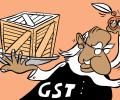
The decision to impose a 28 per cent tax on the full face value of bets placed on online games will be implemented from October 1 even though there was demand for a review from states like Delhi and Goa, finance minister Nirmala Sitharaman said on Wednesday. The GST Council -- the highest decision making body of the new indirect tax regime that comprises Union finance minister and representatives of all states -- discussed the language of amendments that will be needed to enabling taxing online gaming, she said after the panel meeting.

Billionaire banker Uday Kotak founded bank as well as brokerage created and oversaw an offshore fund used by an unnamed investor to profit from a plunge in Adani shares that followed a damning Hindenburg report, the US short seller said on Tuesday. Hindenburg Research, which had in a January 2023 report alleged stock market manipulations and accounting fraud at the Adani group, said it has received a show cause notice from the Indian markets regulator Sebi over gains made from betting on the conglomerate's shares.

If the current restrictions remain in place until the end of May, we estimate that the cumulative loss of activity could amount to around $10.5 billion, or around 0.34 percentage point (pp) of annual nominal gross domestic product, say Barclays economists.

The Reserve Bank of India (RBI) will meet top executives of asset reconstruction companies (ARCs) on Friday to take stock of the sector. During the meeting, ARCs will also seek clarity from the regulator on bank borrowing. While there is no regulatory ban in place, ARC sources said banks often refuse funding.

India's monthly per capita income, the measure of standard of living, is likely to be at Rs 7,378.17.


The Indian economy remains on track to regain its position as the world's fastest-growing major economy after official estimates on Friday put the expansion at a tempered 9.2 per cent this fiscal amid concerns over the impact of a resurgent virus on the fragile recovery. The growth in the gross domestic product (GDP) of 9.2 per cent in April 2021 to March 2022 fiscal (FY 2021-22) given by the National Statistical Office (NSO) in its first advance estimate compares with 9.5 per cent expansion forecast by the Reserve Bank of India (RBI) last month. The economy had contracted by 7.3 per cent in the previous financial year.

The third quarter (Q3) of 2023-24 (FY24) has proven to be pivotal, witnessing some startups turning profitable and others enhancing their performance as their businesses finally begin to deliver. Startups like Delhivery, Zomato, PolicyBazaar, Mamaearth, and Nykaa have either become profitable or improved their profit margins in Q3FY24. A renewed focus on profitability, supported by operational efficiencies, expense rein-in, and robust demand during the festival season, has empowered companies to strengthen their performance.

The biggest loss of jobs among salaried employees was of 'white-collar professional employees and other employees'. Among these are engineers including software engineers, physicians, teachers, accountants, analysts and so on, who are professionally qualified and are employed in some private or government organisation All the gains made in their employment over the past four years were washed away during the lockdown, reveals Mahesh Vyas.

India's economy grew 6.1 per cent in the fourth quarter of 2022-23, pushing up the annual growth rate to 7.2 per cent, official data showed on Wednesday.

FMCG major Hindustan Unilever on Wednesday reported a 1.53 per cent decline in consolidated net profit to Rs 2,561 crore for the fourth quarter ended March 31, 2024 due to factors such as deflation and softening of commodity prices. The company had posted a net profit of Rs 2,601 crore in the year-ago period, according to a regulatory filing from HUL. Net sales of Hindustan Unilever Ltd (HUL) were almost flat to Rs 15,013 crore in the March quarter.
The wholesale price index inflation is projected at 6.4 per cent for 2017-18.

ADB too had projected Indian's economic growth for current fiscal at 7.6 per cent
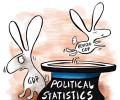
The GDP growth is estimated to come at the "deceptively high" level of 20 per cent for the April-June 2021 quarter but is far below the same in the pre-COVID times, rating agency Icra said on Wednesday. Icra said the low base of the last year, when the GDP had contracted by close to 24 per cent, "conceals" the impact of the second wave of COVID-19 infections. Economic activity is boosted by robust government capital expenditure, merchandise exports and demand from the farm sector, it said, estimating the GDP to grow by 20 per cent and the gross value added (GVA) will register a growth of 17 per cent for the June quarter.

Economic growth was revised from 4.7 per cent in FY14.

The economy is expected to throw up better numbers in the September quarter with GDP contraction of 9.9 per cent, as against 24 per cent in Q1 at the onset of the pandemic, says a report. The government will release the Q2 GDP numbers later this month. In the first contraction since 1980, the economy shrank a full 23.9 per cent in the first quarter of the fiscal after the whole nation was put under a strict lockdown.

Maharashtra's "radical" lockdown move will have an economic impact of Rs 40,000 crore, with the trade, hotels and transport sector to bear the biggest dent, Care Ratings said on Monday. The rating agency said the loss of economic activity will have a 0.32 per cent impact on the gross value added (GVA) growth at the national level. It revised down its national GDP growth estimate to 10.7 - 10.9 per cent from the 11 - 11.2 per cent given a week ago. Maharashtra has been contributing nearly 60 per cent to the daily COVID-19 infections nationally and had over 57,000 new cases on Sunday.

Rating agencies Crisil and Icra on Monday revised down their India growth projections for the current fiscal and the second quarter mainly due to the ripple effect of slowdown in global growth and mixed crop output. Crisil downgraded the India growth forecast by 30 bps to 7 per cent while Icra pegged the economic expansion at 6.5 per cent for the second quarter of FY2022-23. "We have revised down our forecast for real gross domestic product growth to 7 per cent for fiscal 2023 from 7.3 per cent, primarily because of the slowdown in global growth that has started to impact our exports and industrial activity.

Crops including fruit, vegetables account for 60% of GDP in agriculture, forestry, fishing sector.

'We will have to wait for one more year to cross the 7% mark, which should be possible in the absence of any disruptive reform,' points out CARE Ratings Chief Economist Madan Sabnavis.

India's exports are becoming less vulnerable to changes in world demand and exchange rates, according to a publication titled 'Re-examining Narratives: A Collection of Essays', penned by chief economic advisor (CEA) V Anantha Nageswaran and his team. The publication pointed out that this conclusion has been drawn from the fact that there has been a decrease in the income elasticity of exports to 3.44 during 2009-2022, from 5.67 during 1991-2008, and in the inverse price elasticity of exports to 0.4 from 2.7. While a decline in elasticities is favourable in the presence of downside risks such as a decline in global demand and an appreciation of exchange rates, it may not be beneficial during boom periods.

The CSO said that the first revised estimates for 2016-17 have been compiled using industry-wise/institution-wise detailed information instead of using the benchmark-indicator method employed at the time of release of Provisional Estimates on May 31, 2017.

Domestic ratings agency Icra on Monday forecast a 2 per cent GDP growth in the fourth quarter of 2020-21, and a 7.3 per cent contraction for the full fiscal year. From a GVA or gross value added perspective, the agency pegs Q4 growth at 3 per cent and the full year contraction at 6.3 per cent. According to the agency, the 2 per cent projected GDP growth will help the economy avoid a double-dip recession as indicated by the National Statistical Office (NSO) for Q4. Icra's projection is better than the 8 per cent contraction forecast by the NSO as it sees Q4 growth at only 1.1 per cent.

The net profit of the listed Adani group companies more than doubled year-on-year (Y-o-Y) in the first half of 2023-24 (H1FY24), even as their revenue declined in this period. The nine firms posted a 107.7 per cent jump in net profit at Rs 23,929 crore in April-September compared to the year-ago period. Net sales, on the other hand, were down 14 per cent to Rs 1.49 trillion in H1FY24, data collated by Business Standard showed.

Discount retailer DMart (Avenue Supermarts) hit its highest levels in a year and a half last week and is up over 11 per cent in the last one month. The company depends on low operating costs to offer the lowest prices to consumers, which enables sales velocity and scale, further reducing costs. This virtuous feedback loop has helped DMart gain market share in a sector dominated by unorganised stores.

The new IIP series based on the new base year, is expected to lead to better capturing of ground data

The wide-based NSE sensitive index is currently hovering around 7,900.

In the April-June quarter (Q1) of 2023-24 (FY24), growth in sales of FSN E-Commerce Ventures (the parent company of Nykaa) decelerated to 24 per cent year-on-year (Y-o-Y), and 9 per cent quarter-on-quarter (Q-o-Q), compared with 34 per cent in the previous quarter, due to a decline in the beauty & personal care (BPC) and fashion division's gross merchandise value (GMV). But Nykaa claimed it gained market share in both divisions. The earnings before interest, taxes, depreciation, and amortisation (Ebitda) margin of 5.2 per cent expanded 120 basis points (bps) from a year earlier.

The GDP has been estimated at Rs 126.54 lakh-crore (Rs 126.54 trillion).

The panel, headed by the Union finance minister and comprising of representatives of all states and UTs, decided on tax rate based on recommendation of a group of ministers that looked at taxing casinos, horse racing and online gaming.

Chief economist at State Bank of India has revised downward the full-year growth forecast to a low 6.8 per cent from 7.5 per cent earlier for FY2023, citing "the way below GDP numbers for the first quarter". The National Statistical Office on Wednesday released the Q1 growth numbers which showed a consensus growth of 13.5 per cent, pulled down by the poor show of the manufacturing sector, which reported a paltry 4.8 per cent expansion in the first three months of FY23, negating the robust show by the services sector. Consensus forecast was 15-16.7 per cent of which the RBI made the highest forecast of 16.7 per cent.

'If because of El Nino, the monsoon is affected adversely in the current year, naturally it will affect income projections and consequently Budget numbers.'

The demonetisation seems to have impacted the GVA in the third as well as fourth quarter of 2016-17 which slipped to 6.7 per cent and 5.6 per cent respectively, from 7.3 per cent and 8.7 per cent.

Central Statistics Office has come out with GVA to measure growth.
Embattled Adani Group on Monday said it has repaid loans aggregating $2.65 billion to complete a prepayment programme to cut overall leverage in an attempt to win back investor trust post a damning report of a US short seller. In a Credit Note released on Monday, Adani Group said it has made a full prepayment of $2.15 billion of loans that were taken by pledging shares in the conglomerate's listed firms and also another $700 million in loans taken for the acquisition of Ambuja Cement. "The prepayment was done along with interest payment of $203 million," it added.

>It's not easy to predict the market. But there are at least two positive factors to back the PSU banks, explains Tamal Bandyopadhyay.

The GDP slumped to a three-year low lagging China for the second straight quarter -- as manufacturing slowed ahead of the GST launch amid demonetisation effect.

The country's largest listed footwear brand by market capitalisation, Metro Brands, posted better than expected December quarter results for the 2022-23 financial year (FY23), riding on store expansion and strong same store sales (SSS) growth. Profitability too remained robust, even as net profit growth was marginally lower. The company, which retails across the Metro, Mochi, Walkway, Crocs and Fitflop formats, posted a 24 per cent growth in revenues over Q3FY22.

During the six-month period (April-September 2019), the Indian economy grew 4.8 per cent as against 7.5 per cent in the same period a year ago.

There's no place like home, but even for the affluent buying one in India is difficult. On top of that, the coronavirus pandemic-now in its eighteenth month-has made life uncertain. A hopeful thing is buying a house looks alluring as loan interest rates fall below 7 per cent, their multi-decadal lows. The slow decline in GDP growth after demonetisation, followed by the economic shock caused by Covid-19 waves, has hurt us unevenly.
 © 2026 Rediff.com - Advertise with us - Disclaimer - Privacy Policy - Sitemap - Feedback - About us - Terms of use - Grievances